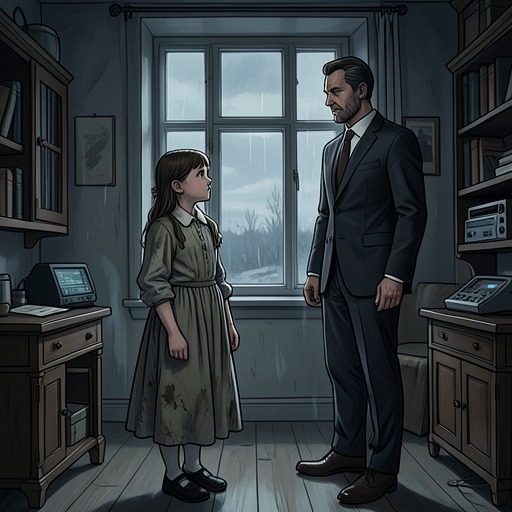
Children’s diminished culpability and developmental differences
Just MercyChildren’s diminished culpability and developmental differences describe why children should not be judged or punished as if they possessed adult judgment, self-control, and life experience. In the book, the argument joins developmental science to the lived circumstances of young defendants: adolescence brings a period of heightened vulnerability to risk, while abuse, violence, neglect, and inadequate care can further constrain a child’s choices. The point is not that serious violence causes no harm, but that a child’s age, development, circumstances, and capacity for change matter when assigning responsibility and choosing a sentence.
Development and Judgment
The developmental argument draws on a mismatch between two systems that mature on different timelines. Around puberty, increased activity in the socioemotional system heightens reward-seeking, sensation-seeking, and risk-taking. The cognitive-control system and its connections mature more gradually, so stronger impulses and attraction to immediate rewards can precede the development of more advanced self-regulation. This gap creates a period of heightened vulnerability during middle adolescence rather than a single moment at which a young person suddenly acquires adult judgment.
The legal argument translates that developmental account into concrete limits on adolescent decision-making. Young teenagers have less life experience and background knowledge to guide choices; they may struggle to generate alternatives, imagine consequences, and feel confident enough in their own judgment to choose and persist in a reasoned course. Research cited in the litigation describes gradual gains in cognitive control and psychosocial maturity, with important functions and capacities developing through adolescence rather than being fully present in its earliest years. The argument therefore treats youth as a meaningful condition of decision-making, not merely a number attached to an offense.
Circumstances Around the Child
Development unfolds within relationships and environments. The book argues that the ordinary limitations of childhood can become more consequential when combined with abuse, violence, dysfunction, neglect, and the absence of loving caregivers. These conditions do not erase a child’s actions; they help explain how a young person may arrive at an act of extreme violence without the judgment or resources of an adult.
Charlie illustrates how a child’s conduct can be read alongside the conditions immediately surrounding it. He was fourteen, stood five feet tall, weighed less than 100 pounds, and had no juvenile record. At school he had earned certificates for perfect attendance, and his mother described him as a good child who did what she asked. Yet Charlie admitted shooting and killing George, his mother’s boyfriend. George had repeatedly come home drunk and violently beaten Charlie’s mother; on three occasions in the preceding year and a half, the injuries were serious enough to require medical treatment. On the night of the shooting, George struck her in the face so violently that she fell unconscious and bleeding. These details do not settle the legal question of responsibility, but they make the setting of a child’s decision impossible to separate from the violence he witnessed and the immediate crisis he encountered.
Antonio Nuñez’s childhood was shaped by violence both outside and inside his home. In South Central Los Angeles, gunfire erupted often enough that his mother made the children get down on the floor, and nearly a dozen neighbors were killed in crossfire. At home, Antonio was beaten by his father from the time he was very young and witnessed his parents assault and threaten one another. After he was shot at thirteen, his brother José was killed while running to help him. Sent to relatives in Las Vegas, Antonio stayed out of trouble, helped at home, and did his homework with assistance. But probation authorities ordered him back to Los Angeles, where he lived blocks from the place his brother had been murdered. A court later described his flashbacks, avoidance of the area, heightened awareness of threats, and intensified need for self-protection. His circumstances show how a young person’s conduct can be affected by accumulated trauma and by institutional decisions that return him to the environment associated with it.
From Developmental Evidence to Legal Change
The developmental account became a basis for challenging sentences that treated children as permanently beyond the possibility of release. Litigation asked courts to recognize both how adolescence affects judgment and how a child’s environment can compound those developmental limits. In cases involving children sentenced to life without parole for non-homicide offenses, the Supreme Court of the United States barred that punishment. A later ruling barred mandatory life-without-parole sentences for children convicted of homicide. The latter decision meant that no child could again be automatically sentenced to die in prison, and more than two thousand people sentenced to life without parole for crimes committed as children became potentially eligible for relief and reduced sentences.
The book also describes the difficulty of turning constitutional recognition into actual relief. Although Florida, Louisiana, and Virginia together held close to 90 percent of the non-homicide cases, trial courts still often had to be persuaded of the basic unfairness of treating children like adults. In Orange County, California, Antonio’s life-without-parole sentence was replaced with a sentence of 175 years. The defense had to return to an appellate court to obtain a reasonable sentence. Joe Sullivan and Ian Manuel also encountered resistance, although their eventual sentences allowed for release after additional years in prison. These cases show that acknowledging developmental difference in principle does not itself ensure that courts will provide a meaningful opportunity to return to society.
Children in Adult Systems
The concept extends beyond sentencing to the institutions that decide where children are held and how they are tried. The book argues for a total ban on housing children under eighteen with adults in jails or prisons, and describes litigation seeking to stop that practice. It also argues that very young children should never be tried in adult court: twelve-, thirteen-, and fourteen-year-olds are vulnerable to problems that heighten the risk of wrongful conviction, and cannot defend themselves in the adult criminal justice system on equal terms.
Examples of childhood vulnerability also expose failures in legal procedure. Phillip Shaw was fourteen when he was improperly convicted and sentenced to life without parole; African Americans had been excluded from his jury. Demarious Banyard, a thirteen-year-old who had been bullied into participating in a robbery that ended in a fatal shooting, received a mandatory life sentence after the jury was wrongly told that he had to prove his innocence beyond a reasonable doubt and the state introduced impermissible evidence. His sentence was replaced by a finite term, giving him hope for release. Dante Evans, a fourteen-year-old living in a FEMA trailer with an abusive father after Hurricane Katrina, had told school officials about the abuse without receiving intervention. The Mississippi Supreme Court granted him a new trial after the court considered the exclusion of evidence concerning his previous diagnosis of post-traumatic stress disorder. These cases connect developmental vulnerability not only to conduct, but to children’s ability to navigate proceedings and to the consequences of adult institutions’ decisions.
Change, Support, and Significance
The argument for diminished culpability is also an argument against treating a childhood offense as a complete and permanent definition of the person. In the juvenile lifer cases, many clients had matured into adults who were more thoughtful and reflective and capable of making responsible decisions. Their later selves were significantly different from the confused children who had committed violent crimes. That change did not undo the harm, but it challenged sentences built on the assumption that the child’s worst act fixed the course of an entire life.
Release, in turn, requires more than a change in a sentence. After decades in prison, clients may have few support systems, so the Equal Justice Initiative created a re-entry program offering housing, job training, life skills, counseling, and other services. Ian Manuel, imprisoned since age thirteen and held in solitary confinement for much of that time, was released in 2016. He was embraced by Debbie Baigre, the woman he had shot, before joining the re-entry program; he later wrote and performed spoken-word poetry. Joe Sullivan, released in 2017, entered the residential program and later moved to Joseph House, a home for formerly incarcerated people with significant disabilities. The program reflects a practical consequence of the developmental argument: if people can change, a just response must make room for them to build a life after confinement.
Children’s diminished culpability thus links developmental science, family and community conditions, procedural fairness, sentencing, and the possibility of change. It resists both extremes: it does not deny the gravity of violence, and it does not allow a grave act committed in childhood to stand as proof that a person can never become more than that act. The cases make the distinction concrete: responsibility can be recognized without pretending that a child had an adult’s capacities, and accountability can coexist with a sentence that leaves open a future.